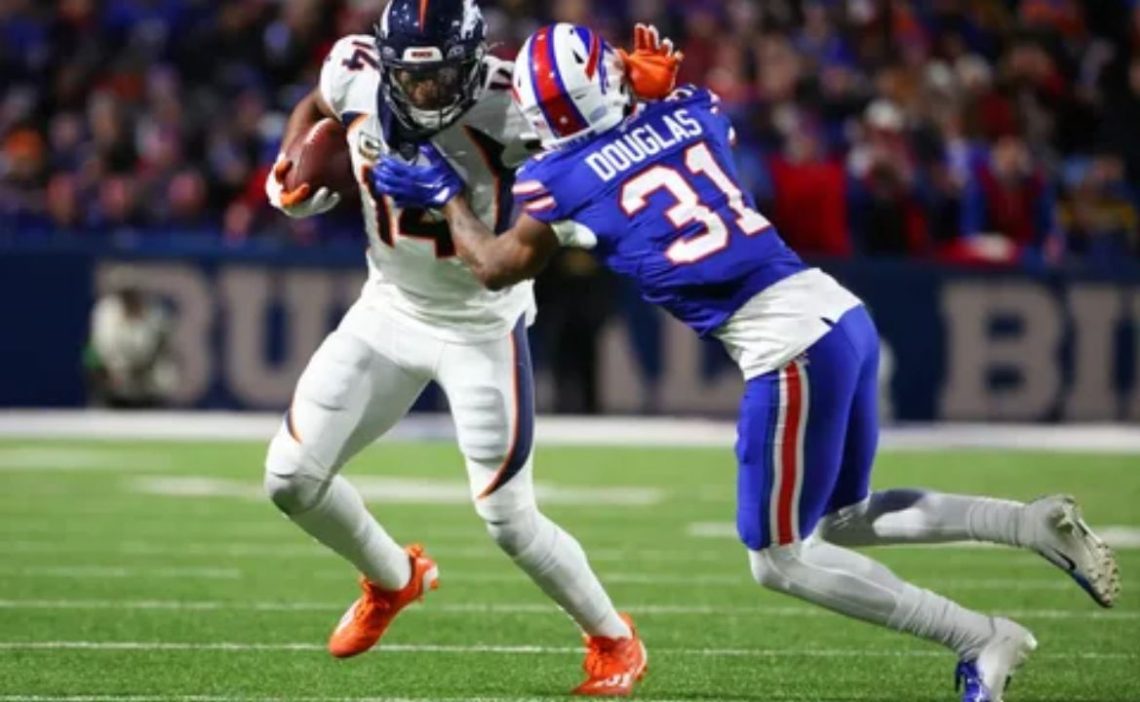
The 2024 NFL Wild Card Weekend delivered an emphatic statement from the Buffalo Bills as they dominated the Denver Broncos 31-7 at Highmark Stadium on January 12, 2025. This comprehensive breakdown examines the denver broncos vs buffalo bills match player stats that defined one of the most lopsided playoff games of the weekend, ending Denver’s first postseason appearance since their Super Bowl 50 victory.
Game Overview: Bills’ Commanding Performance
The Buffalo Bills entered the playoffs as the AFC’s second seed with a 13-4 record, while the Denver Broncos secured the seventh seed with a 10-7 finish. Despite Denver’s surprising playoff berth under rookie quarterback Bo Nix, the Bills demonstrated why they were considered legitimate Super Bowl contenders with a comprehensive victory on both sides of the ball.
Quarterback Showdown: Allen Dominates Nix
Josh Allen’s Near-Perfect Execution
Buffalo Bills quarterback Josh Allen completed 20 of 26 passes (77%) for 272 yards and two touchdowns, posting a 135.4 passer rating. He also added 46 rushing yards on eight carries. Interestingly, despite the dominant performance, this was considered below Allen’s playoff average, as he entered the postseason averaging 311 yards and 2.6 touchdowns per game.
The reigning NFL MVP made history during the game, surpassing Steve Young for the most postseason rushing yards by a quarterback with his 46-yard rushing performance. Allen’s playoff excellence continued as he now sits fifth in NFL history with a career playoff interception percentage of just 0.99%, having thrown only four interceptions in 404 postseason attempts.
Bo Nix’s Playoff Baptism by Fire
The denver broncos vs buffalo bills match player stats showed a stark contrast in rookie quarterback Bo Nix’s performance. Nix finished 13 of 22 with 144 passing yards and one touchdown, also leading the Broncos with 43 rushing yards on four carries. While Nix showed promise with a 43-yard touchdown pass to rookie wide receiver Troy Franklin on Denver’s opening drive, the Broncos struggled to maintain offensive momentum throughout the game.
The rookie signal-caller faced significant pressure from Buffalo’s defense and generated just 42 passing yards in the second half after 102 through the opening two quarters. Despite a successful regular season where he threw for 3,775 yards and 29 touchdowns, Nix couldn’t match the playoff experience and talent of Allen on this stage.
Ground Game Excellence: James Cook Dominates
One of the most impressive denver broncos vs buffalo bills match player stats came from Bills running back James Cook. Cook carried the ball 23 times for 120 yards and a rushing touchdown in the 31-7 victory. This performance was particularly significant as it was the most rushing yards the Broncos allowed all season, with the previous high being 149 yards versus Indianapolis in Week 15.
The Bills dominated on the ground with 210 total rushing yards, establishing physical dominance that wore down Denver’s defense throughout the contest. Buffalo was extremely confident running the ball, using the ground game 44 times compared to 26 passes, which helped establish a preposterously high 41:43 time of possession.
Cook’s performance validated his status as one of the league’s premier backs, having tied for the NFL lead with 16 rushing touchdowns during the regular season alongside Derrick Henry and Jahmyr Gibbs.
Explosive Plays Define Second Half
The denver broncos vs buffalo bills match player stats revealed a significant shift in offensive execution between halves. Buffalo was unable to generate explosive plays in the first half, recording just one play of 15 yards or more. However, the Bills unlocked the explosive play in the second half, totaling five plays of 15+ yards, two of which were touchdowns.
On a critical fourth-and-1 at Denver’s 24-yard line, Allen bought time and delivered a touchdown pass to Ty Johnson, who made an impressive grab in the back of the end zone. Following a three-and-out by Denver, Allen connected with Curtis Samuel for a 55-yard touchdown, putting the game out of reach.
Defensive Dominance: Buffalo Shuts Down Denver
The Bills’ defense delivered a suffocating performance that dramatically altered the denver broncos vs buffalo bills match player stats after Denver’s opening drive. The Broncos recorded 70 yards on their first drive, but Denver converted their first third down of the game, then went one for their next eight attempts.
Buffalo’s defensive line consistently pressured Nix, limiting his ability to make plays downfield. The Bills’ commitment to stopping the run proved decisive, as Denver struggled to establish any consistent ground attack against one of the league’s most physical defenses.
Key Statistical Comparisons
When examining the complete denver broncos vs buffalo bills match player stats, several categories highlight Buffalo’s dominance:
Time of Possession: Buffalo controlled the game clock for over 41 minutes, preventing Denver’s offense from finding any rhythm and exhausting the Broncos’ defense.
Third Down Efficiency: Denver’s one-for-nine performance on third downs after their opening drive proved catastrophic, repeatedly forcing punts and preventing sustained drives.
Turnover Battle: While neither team committed multiple turnovers, Buffalo’s ability to protect the football while applying consistent pressure on Nix proved decisive.
Red Zone Execution: The Bills capitalized on scoring opportunities while Denver struggled to generate red zone chances beyond their opening possession.
Individual Performance Highlights
Beyond the quarterbacks and lead running back, several players made significant contributions to the denver broncos vs buffalo bills match player stats:
Bills Receivers: Dalton Kincaid caught a 35-yard deep pass from Allen, showcasing the Bills’ vertical threat capability that opened up throughout the second half.
Denver’s Bright Spot: Troy Franklin’s 43-yard touchdown reception represented Denver’s lone offensive highlight, demonstrating the potential connection between Nix and his rookie receiver for future seasons.
Defensive Standouts: Buffalo’s defensive line consistently collapsed the pocket, limiting Nix’s effectiveness and preventing Denver from establishing offensive rhythm.
Playoff Implications and Historical Context
This victory advanced Buffalo to the Divisional Round to face the Baltimore Ravens, while ending Denver’s first playoff appearance in nine years. The Bills’ romp culminated an AFC wild-card round in which all three of the conference’s higher seeds handled business.
For the Broncos, despite the disappointing finish, the season represented significant progress under rookie quarterback Bo Nix and head coach Sean Payton’s second year. The playoff appearance broke a lengthy drought and provided valuable postseason experience for a young roster.
Allen’s performance continued his exceptional playoff career, where he has compiled 21 touchdown passes and just four interceptions with 2,723 passing yards, 563 rushing yards, and five rushing touchdowns across 10 playoff games entering this matchup.
Looking Forward
The comprehensive nature of Buffalo’s victory in this denver broncos vs buffalo bills match player stats breakdown demonstrated the gap between playoff-experienced teams and those making their first postseason appearance in years. Allen’s dual-threat ability, Cook’s dominant rushing performance, and Buffalo’s defensive pressure proved too much for Denver’s young squad.
For the Broncos, the loss provided valuable lessons about playoff intensity and execution. Nix showed flashes of potential but clearly needs additional development to compete with elite quarterbacks like Allen on the biggest stages. Denver’s defense, while strong during the regular season, faced challenges containing Buffalo’s multifaceted rushing attack.
The Bills’ balanced offensive approach and defensive dominance sent a clear message to remaining playoff contenders. With Allen playing at an MVP level and the ground game firing on all cylinders, Buffalo positioned itself as a legitimate threat to finally break through and reach their first Super Bowl since the 1990s dynasty era.
Conclusion
The denver broncos vs buffalo bills match player stats told the story of a comprehensive playoff victory by a veteran team operating at peak efficiency against a young, overmatched opponent. Josh Allen’s near-flawless quarterbacking, James Cook’s dominant rushing performance, and Buffalo’s defensive suffocation combined to produce a statement victory in the Wild Card round.
While Denver’s playoff return ended in disappointment, the experience gained by Bo Nix and the young Broncos roster provided a foundation for future postseason runs. Meanwhile, the Bills advanced with momentum and confidence, showcasing the complete team performance necessary for deep playoff success.
This matchup exemplified the difference between playoff experience and playoff inexperience, as Buffalo’s seasoned roster handled business efficiently while Denver struggled with the intensity and execution required in January football. The denver broncos vs buffalo bills match player stats will be remembered as a dominant performance by one of the AFC’s premier teams against a promising but still-developing opponent.